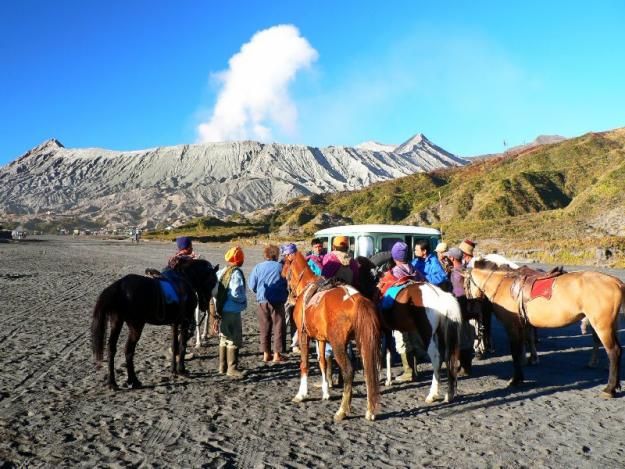
Bromo Horse Riding: A Complete to Across Mount Bromo’s Sea of Sand
Horse riding in Bromo is one of the most iconic ways to experience the dramatic volcanic landscape of East Java. Set inside the vast Sea of Sand, this activity allows visitors to travel across black volcanic terrain with views of Mount Bromo, Mount Batok, and the surrounding Tengger caldera.
For many travellers, a Bromo horse ride is more than transportation. It is part of the atmosphere of visiting Mount Bromo: cool mountain air, volcanic dust, local horse handlers, distant crater views, and a landscape that feels completely different from other destinations in Indonesia.
Whether you are visiting Bromo after sunrise at Penanjakan or adding the activity to a jeep tour itinerary, here is what to know before riding a horse at Mount Bromo.
What Is Bromo Horse Riding?
Bromo horse riding is a guided pony or horse experience across the Sea of Sand, also known as Lautan Pasir Bromo.
Local handlers lead the horses across the sand toward the Mount Bromo crater approach. The route offers wide views of the caldera, the cone-shaped Mount Batok, volcanic ridges, and the black sand landscape surrounding Bromo.
Horse riding is often chosen by travellers who want a different experience from walking across the Sea of Sand. It is also useful for visitors who prefer to save their energy for the walk and stairs near the crater area.
Why Try Horse Riding at Mount Bromo?
The main appeal of horse riding in Bromo is the landscape. The Sea of Sand is wide, open, and volcanic, creating a dramatic setting that is very different from a typical horse-riding trail.
Riding across the sand gives visitors time to enjoy the scenery at a slower pace. The sound of hooves on volcanic sand, the cool air, and the view of Mount Bromo in the distance create a memorable East Java travel experience.
It is also a practical choice for visitors travelling with older family members, young adults, or people who do not want to walk the entire distance across the caldera.
Is Bromo Horse Riding Suitable for Beginners?
Yes, Bromo horse riding can be suitable for first-time riders because horses are generally accompanied and led by local handlers. You do not need advanced riding skills to enjoy the experience.
However, beginners should still follow instructions carefully. Sit upright, keep both feet secure in the stirrups, avoid sudden movements, and hold the saddle or reins as instructed by the handler.
The terrain can be dusty, uneven, and windy. Riders should be prepared for a slow, guided journey rather than a fast or independent horseback adventure.
What to Expect During a Bromo Horse Ride
A typical Bromo horse-riding experience includes a short ride across the Sea of Sand toward the foot of Mount Bromo. The exact route, duration, and price can differ depending on the season, the starting point, the local operator, and current conditions.
After arriving near the crater approach, visitors usually continue on foot. Reaching the crater rim requires walking uphill and climbing stairs, so horse riding does not remove the need for some physical effort.
The ride itself is usually calm and scenic. It is best enjoyed as part of a wider Bromo itinerary that may include a sunrise viewpoint, a jeep tour through the Sea of Sand, Whispering Sands, Teletubbies Hill, or Pura Luhur Poten.
Best Time for Horse Riding in Bromo
Early morning is usually the best time to ride a horse in Bromo. The weather is cooler, the light is softer for photography, and the Sea of Sand often looks especially atmospheric after sunrise.
Many visitors combine horse riding with a Bromo sunrise tour. After watching the sunrise from Penanjakan, Kingkong Hill, or another viewpoint, travellers typically continue by jeep to the Sea of Sand before starting the horse ride.
Late morning can be warmer, dustier, and busier. During the rainy season, conditions may also change quickly, so travellers should check with local guides or accommodation providers before leaving.
What to Wear for Bromo Horse Riding
Mount Bromo can be cold before sunrise and dusty after the sun comes up. Wearing the right clothing will make the ride far more comfortable.
Choose long trousers, a light jacket, closed shoes, and sunglasses. A scarf, face mask, or buff is useful for protecting your face from dust, especially when jeeps and horses are moving nearby.
Bring a small bag for your phone, water, camera, sunscreen, and any personal medication. Use a secure strap for cameras and avoid carrying loose items that could fall while riding.
Horse Welfare: What Responsible Travellers Should Check
Horse riding can support local livelihoods, but visitors should observe the condition of the horse before deciding to ride.
Choose a horse that appears alert, properly saddled, and in good physical condition. Avoid riding if the horse looks injured, severely underweight, exhausted, or poorly handled. Do not overload the horse, and follow the handler’s recommended rider limits.
Travellers can also choose to walk across the Sea of Sand when they prefer a lower-impact option. Walking gives you more time to take photographs and enjoy the volcanic scenery at your own pace.
How to Add Horse Riding to a Bromo Itinerary
A classic Bromo itinerary often starts before dawn. Visitors travel by jeep to a sunrise viewpoint, then continue down to the Sea of Sand after sunrise.
From there, you can choose between walking or riding a horse toward Mount Bromo’s crater approach. After visiting the crater area, most tours continue to other attractions such as Whispering Sands, Savannah, or Teletubbies Hill.
For travellers who want a slower experience, consider staying overnight near Cemoro Lawang or another nearby village. This gives you more flexibility and reduces the pressure of fitting sunrise, jeep travel, horse riding, and crater exploration into a single rushed visit.
Frequently Asked Questions About Bromo Horse Riding
Is horse riding in Bromo worth it?
Horse riding in Bromo is worth it for travellers who want to experience the Sea of Sand in a more memorable and relaxed way. It combines local culture, volcanic scenery, and a practical route toward the Mount Bromo crater area.
Do I need horse-riding experience?
No. Most Bromo horse rides are guided by local handlers, making the activity accessible for beginners.
Can I ride a horse all the way to Bromo crater?
The horse ride typically takes visitors across the Sea of Sand toward the crater approach. Visitors still need to walk uphill and climb stairs to reach the crater rim.
What should I wear for horse riding in Bromo?
Wear warm layers, long trousers, closed shoes, sunglasses, and a face covering for dust. A jacket is especially important for early-morning tours.
Can I walk instead of riding a horse in Bromo?
Yes. Walking across the Sea of Sand is an alternative to horse riding and may be preferable for travellers who want more control over their pace or who wish to avoid riding animals.
Final Thoughts
Horse riding in Bromo offers one of the most distinctive travel experiences in East Java. Crossing the Sea of Sand on horseback, surrounded by volcanic ridges and Mount Bromo’s smoking crater, creates a scene that feels both adventurous and cinematic.
For the best experience, combine a Bromo horse ride with sunrise viewing, a jeep adventure, and enough time to explore the crater area without rushing. Travel responsibly, check the horse’s condition before riding, and respect the natural environment of Bromo Tengger Semeru National Park.
bromo horse riding price 2025 approximately IDR 150.000 – IDR 250.000 per horse for one pax (one way only). depends by the holiday season and availability.